We went to Sicily for a two-week trip staying In Cefalu, Palermo, and Pispisa (and an agri-tourismo near Segesta). We had been to Sicily before in 2009. Too long ago to write a proper blog, but I will include some highlights from that trip as they are still relevant. So, this will be a longer blog than usual, but you can scroll down to the section you might be interested in.
As we had an early get-up at 4.00 am, we stayed in the Thistle near Terminal 5 at Heathrow. The bar and restaurant were fine, if a little pricey, and the terrace has good views of the runway, as the hotel is very near it. Too near perhaps, because claims that the rooms were fully soundproof aren’t true. After complaining to the hotel, they offered us a discount for our next visit. It’s the second time we have used the Thistle, and it’s fine. It does the job and the prices are reasonable.
The flight to Palermo was only two and half hours, and every credit to Falcone-Borsellino Airport as they were very quick getting us through the nonsense. Taxis in Sicily are very expensive, so we caught a train from the airport to Palermo town. The station is a short walk from the arrivals hall. The train took one hour stopping at all the houses, and that was the quick one. Make sure to catch the direct train as the alternative had two changes and took longer. For me, an advantage of rail travel is you see more of the country than you do from a car, and views of the sea whet my appetite for a paddle.
Cefalu
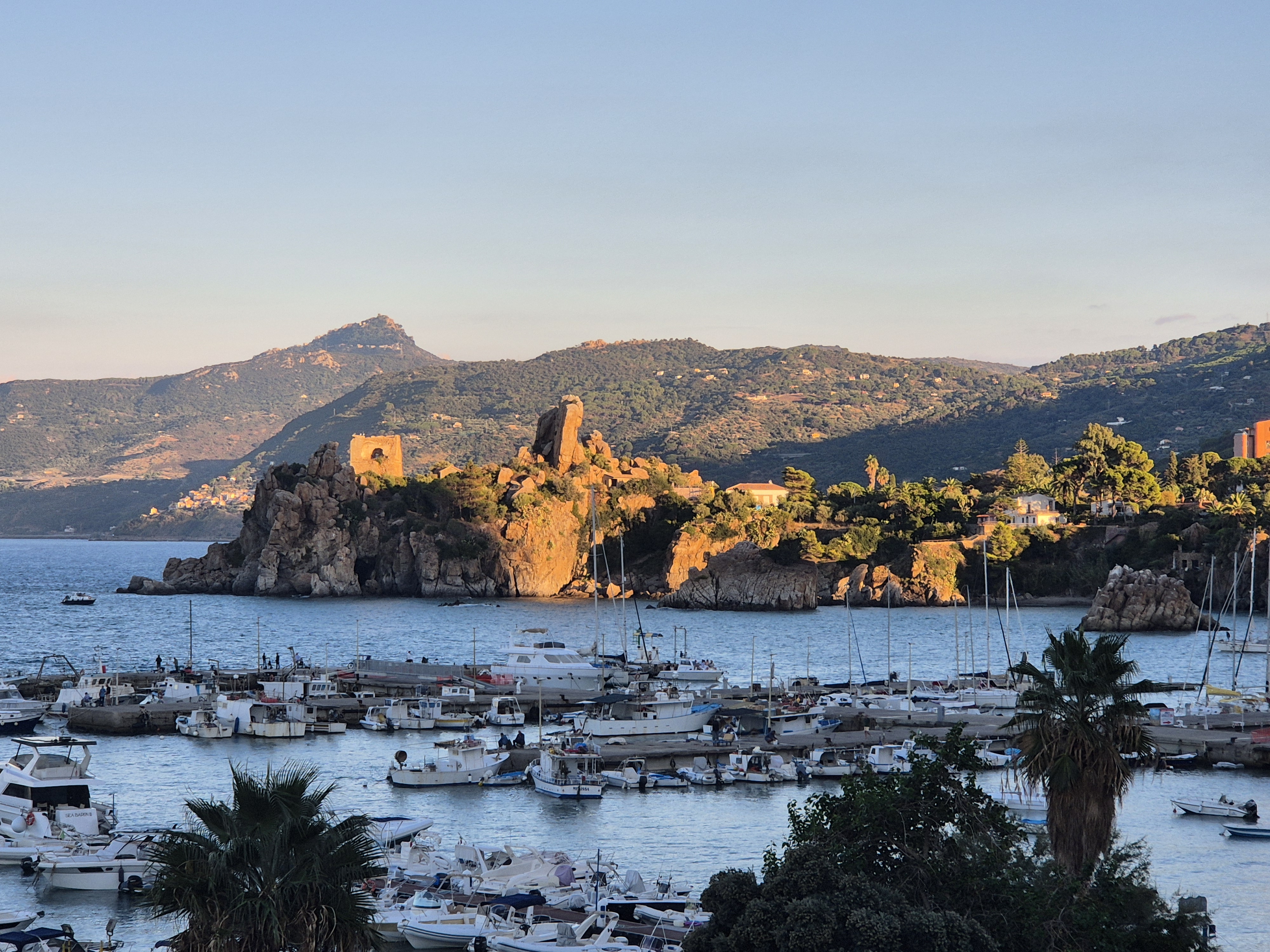
At Palermo Centrale, we hopped on another train for another one-hour journey to Cefalu. There is a taxi rank just outside railway station, and we were able to share a cab with another group. The driver still had the brass neck to charge us €20, but it was a fine acclimatisation to the Sicilian vibe. The end of September is still the holiday season, and on a Saturday afternoon, the streets of the old town were very busy. The season is lengthy, going on till mid- October
No matter, the driver of our 6-seater van barrelled us through the crowded narrow thoroughfares; himself a greasy barrel of a chap. Nobody got killed, but there were many near misses. He bawdily saluted single women by hanging out of the driver’s window making loud miaow, catlike noises. God knows why, but it somehow felt sexist, like a wolf whistle. If this courtship strategy had worked in his 20s, it wasn’t doing so in his 50s, judging by the looks he got. Having dropped the first group off, he stopped a couple of times on the way to our destination and encouraged me take photographs. I had to humour him, but after 12 hours of travelling, I just wanted to rest! Perhaps he’d heard of my blog? He was quite a… ‘character’.
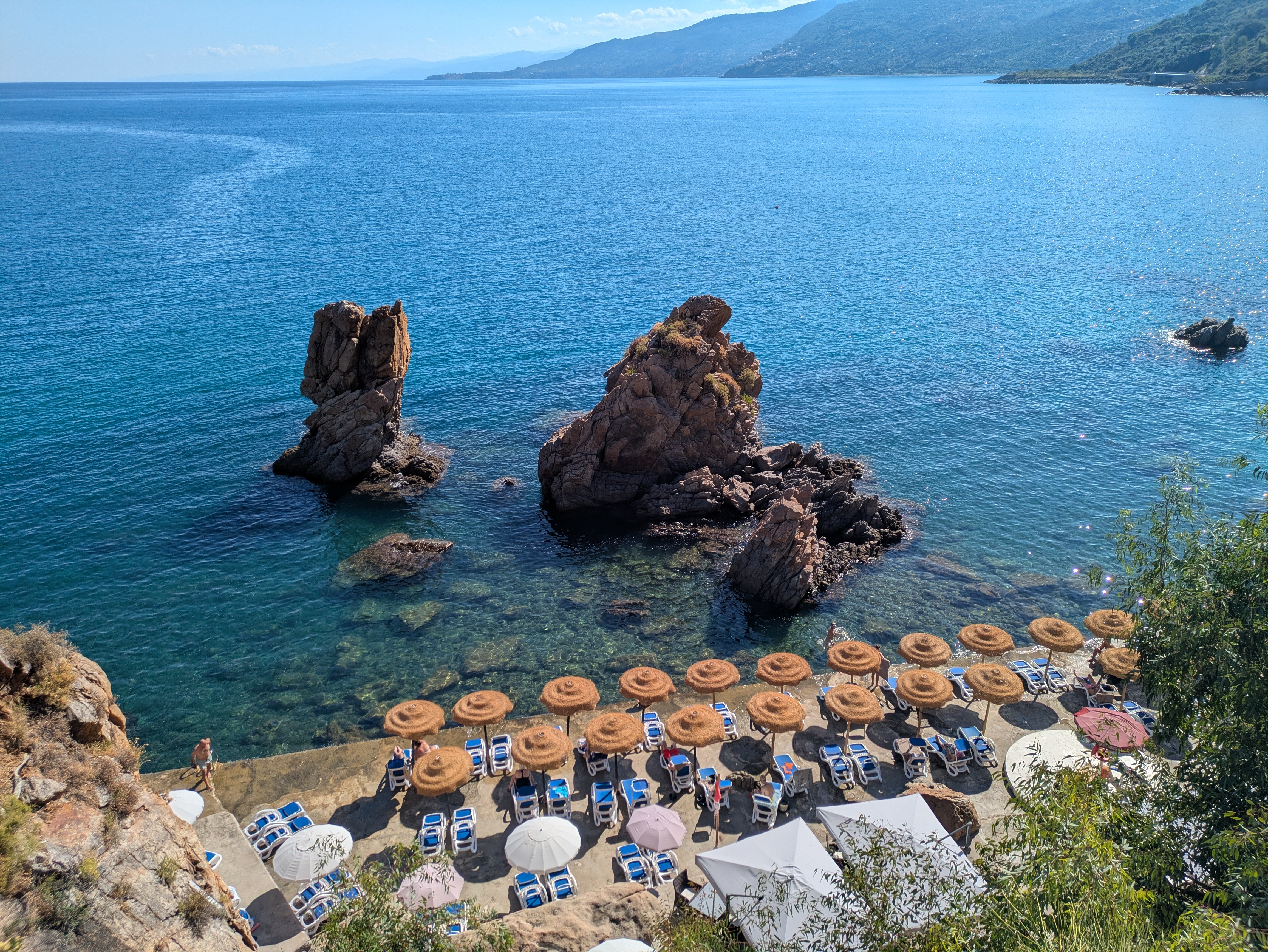
Hotel Karula is 4*. Ignore the little niggles on TripAdvisor about dated rooms. They aren’t really justified in my view. Though one complaint about a neighbour’s dog is fair enough, it had a loud bark and let rip for no reason. You can get a dog put down in Italy for about €100, I would have happily chipped in. Anyway, the hotel’s setting is stunning; the bar terrace and restaurant making the most of gorgeous views over the Mediterranean. The pool is large and has plenty of sunbeds. There are more beds down by the sea. I reckon no guest would ever have to go without one. The rooms are good with all the usual bits and bobs, and a small balcony including two deck chairs. We didn’t have a direct sea view; some rooms do.
Prices for drinks in the bar were pretty reasonable, about €5 for a large beer or a glass of wine. Likewise, the restaurant prices are fine, and the food is very good. We ate in a couple of nights and can recommend the seafood risotto, the sardine pasta, and the lamb chops. At breakfast there is a wide buffet selection, too varied for me to list here, but some highlights: all styles of cooked eggs done to order, a range of coffees, likewise. The orange juice was freshly squeezed. However, don’t leave your breakfast unattended. I nipped back inside, having forgotten my cutlery, and came out to see a seagull had eaten my fried eggs, bacon and toast in less than a minute!
The hotel and its grounds are a pleasant place to hang out, by the pool, by the sea, or in the bar. There are tennis courts for the sporty types. Obviously, Cefalu is a draw. The old town is sumptuous, with higgledy-piggledy streets, bars, restaurants, some nice piazzas, a grand cathedral, a seafront with a beach and promenade. It’s not simply a holiday resort. It’s a vibrant, historical town in its own right.
We stayed just outside of town to get a place with a pool. It’s about a twenty-minute walk into Cefalu from the Hotel Karula. Most of that is a pleasant stroll with very little traffic and views of the Mediterranean. There are some decent restaurants on the way into town which we might not have found had we not walked in. I quite enjoyed the exercise, but it’s a fair point that some would not. I think a four-star hotel should be running a shuttle service, perhaps once an hour; a lot of other places do.
But we had to walk in and, en route, passed a recommended pizzeria. Da Sasa is an unassuming place with indoor space and street seating overlooking the coast. The reviews on TripAdvisor said great pizza, and they were correct. I had Pizza Larry, and it was very,very good! A fairly priced meal at €54 for two pizzas, four glasses of wine, and a bottle of water.
In Cefalu’s main piazza, we dined at Passafiume, a restaurant by the Duomo. I had a seafood pasta dish with anchovies and mussels in a white wine sauce. I really enjoyed it, as it was, well, very err… seafoody. Which isn’t helpful, but anyway, it was. I know what I mean; it tasted of the sea, but in a nice way. Not like when a wave knocks you over, and you get a mouthful of sand and seawater. On our return to the hotel, we stopped in the bar for a nightcap. There was a local folk ensemble playing some ‘music’. Thankfully, we managed to sit quite a distance from them.
We stayed five nights at the Karula, and we agreed that we could have stayed longer. It’s a smashing hotel, and there was more to see and explore in Cefalu that we missed.
Palermo
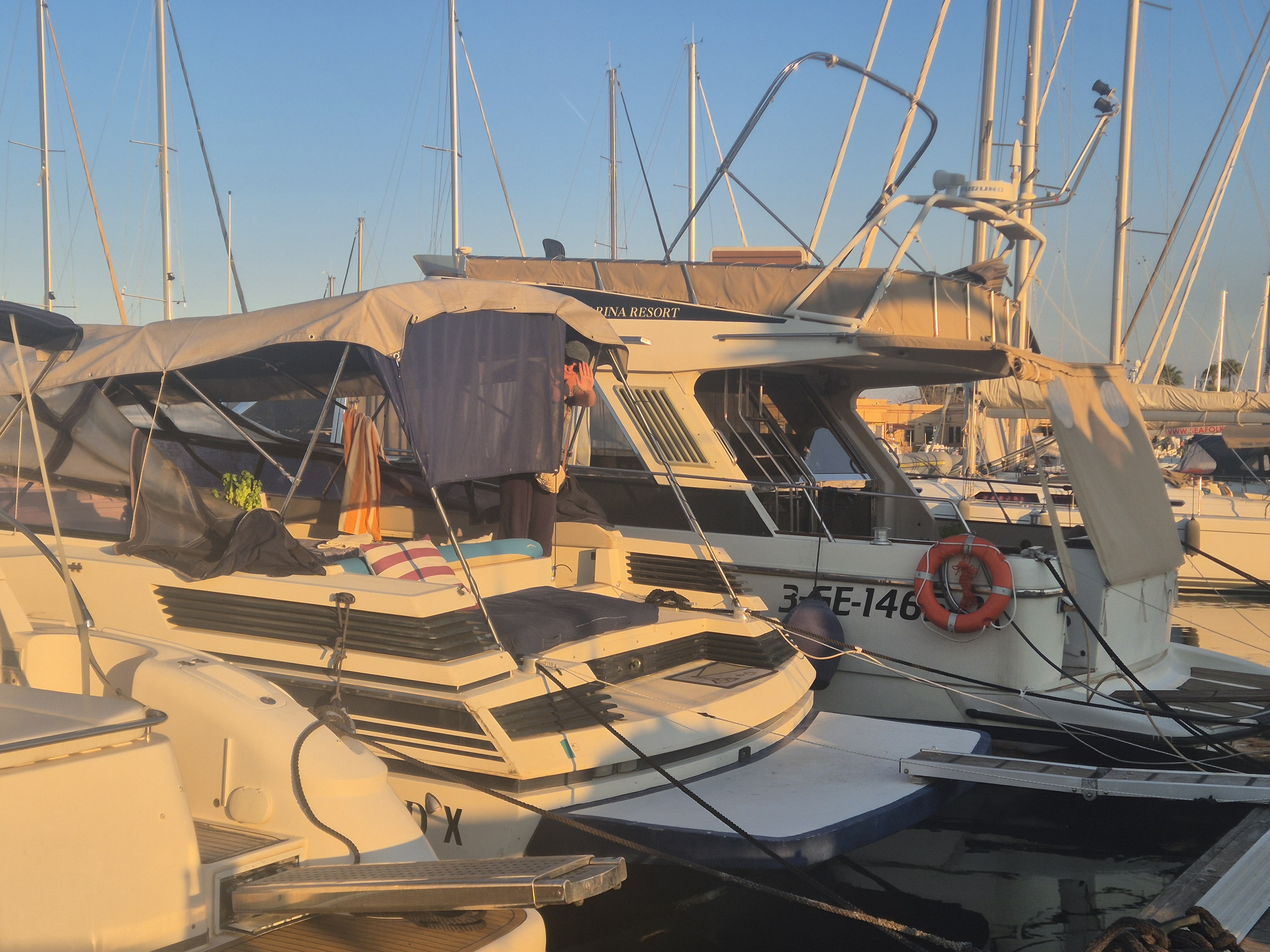
To try something different, we stayed on a boat for four nights in Palermo harbour. It was called Desire Charming Houseboat; which describes the accommodation pretty well! If you can imagine an aquatic caravan, you’ve got a grasp of what it’s like. All the space is maximised to provide home comforts, and you won’t really lack for anything. There was even a shower on board, but it was cramped. That didn’t matter as we had access to a toilet and shower facility just near our berth in the marina. With a decent double bedroom and bunk beds, the boat could have slept four. As we were only two, we had plenty of space for luggage and deck space for lazing about enjoying the dockside environs. It was lovely in the daytime, and there was a comfy sunbathing area on the front of the boat. It was a great place to stay, costing about €120 a night, and only a fifteen-minute walk into Palermo centre.
The only drawback was the noise in the harbour later in the evenings. There was some loud music from nearby bars and… a busker. You could just about hear him. He had a guitar which he could barely play, knew only one song, and he only sang the “na na na na…” chorus of that. I gave him some money on the first night; on the second I went and asked for it back. If you wanted to get a quiet night, you needed noise-reducing headphones. My wife struggled to get to sleep before 2.00 am some nights. It was a great place to stay in so many ways; but there is this caveat.
That said, Palermo was on our moist doorstep, and what a place it is! The city is so complex and rich in culture. It’s too much to decipher or grasp in four days. Palermo is a tourist destination, but it belongs to its people. Mad, chaotic, beautiful, ugly, religious, graffitied, rough, edgy, charming, noisy, friendly. Palermo is Palermo. That’s useful! But if you’ve been to Naples, you’ll know what I mean, because Palermo has a very similar feel. They are both soulful cities. They certainly aren’t cosmopolitan, and they’re not simply Italian either. They are Neopolitan and Palermitan. Lots of local people live in the centre of town. They shop at little grocery stores and markets. Palermo and Naples have something that too many of the world’s cities have swapped for accessibility: authenticity.
Palermo is a fine city to stroll around on foot although, in retrospect, the open-top bus would have been a good idea. Anyway, we walked; here’s a few highlights.
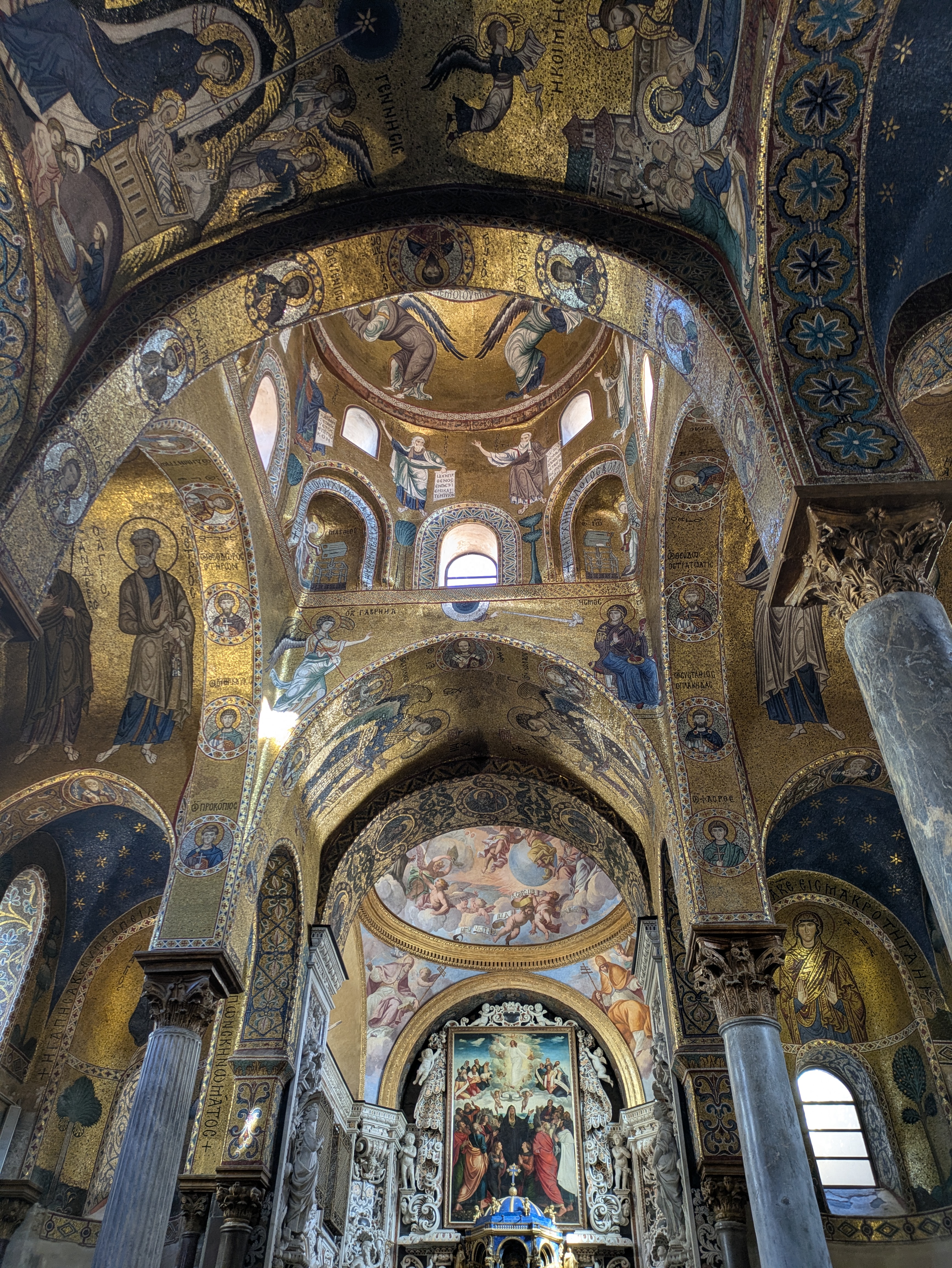
The cathedral, or Duomo, is spectacular on the outside. 1000 years of building, adding and developing. It’s a colossal hunk of brown stone. What was striking was that inside it was all painted white; creating a surprising contrast. Somehow, it felt even more massive inside than out. Santa Maria dell’Ammiraglio is an Eastern Orthodox Church. The entrance fee is €4, but it’s worth it. The artwork is brilliant, Byzantine mosaics in shining gold leaf. The sunlight blazes in through the stained-glass windows and fills the interior. It’s a 1000-year-old light show designed to inspire the faithful.
At a mere 500 years old, the superb Pretoria Fountain is a relative newcomer. Constructed in 1620, Quatro Canti is effectively a new build. Although it is only really a crossroads; they certainly went for it. The decorative stonework deserves a round of applause. The Italians certainly knew how to do ‘grand’ back in the day.
Foodwise, Pizza Leone was so good that we went twice and ordered exactly the same pizzas. They were first class with a light sourdough base, lovely sausage topping with a big hint of fennel. Prices were fine, about €50 for two mains and four glasses of wine, sat next to a busy main road; but this is Palermo! Ristorante Cambusoni is mainly a seafood restaurant. My sea bass was really light and tasty, cooked just right. My spouse had mixed grilled fish: bream, sea bass, three langoustines, tuna steak. It was so good that I licked the plate, much to the waiter’s chagrin. You need to book here, as it is a popular place. Encanto Burger is a decent place too, like a kind of upmarket MacDonalds. The burgers were chunky and full-on.
Segesta
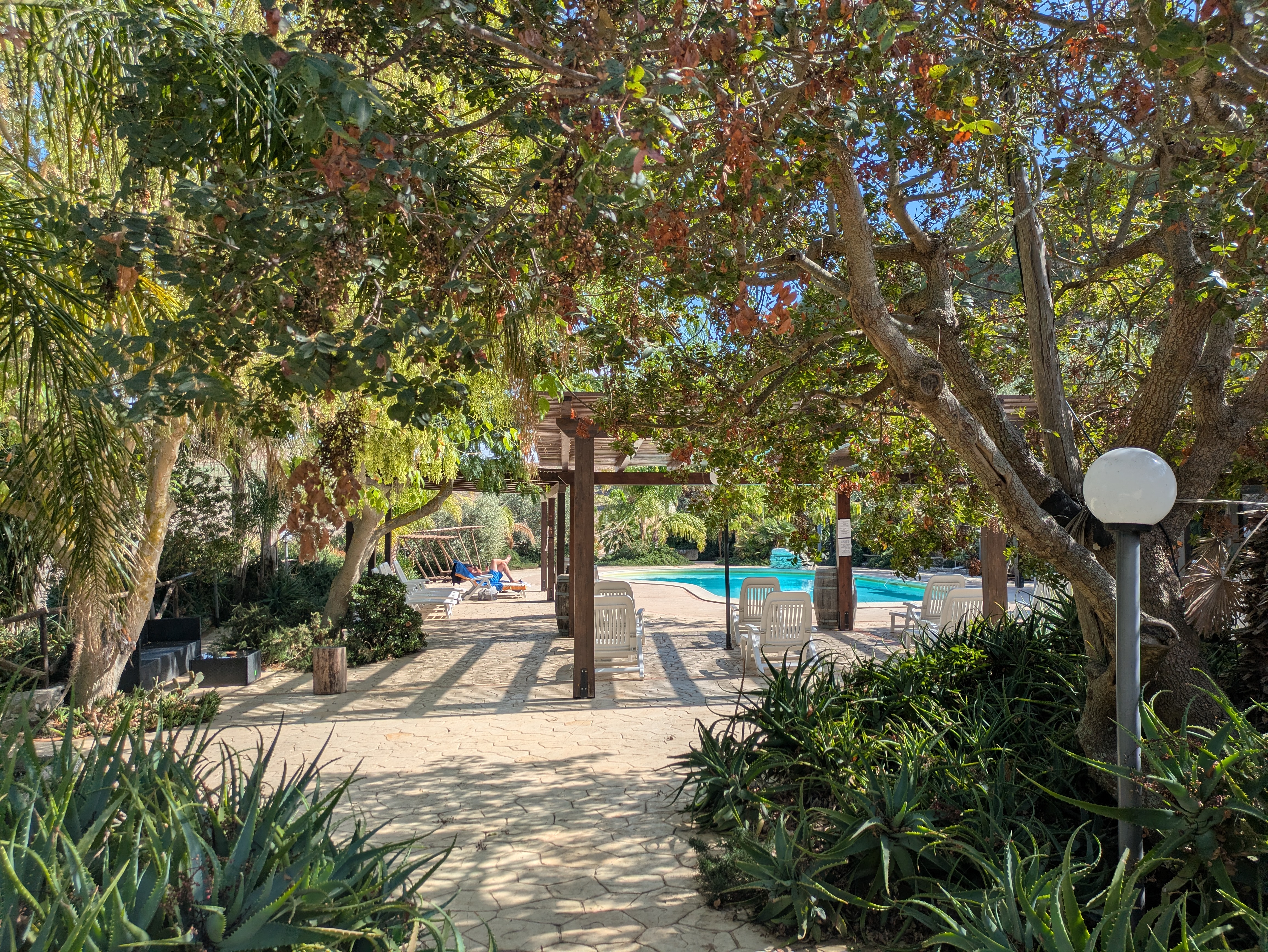
For the final leg of our holiday, we fancied a change and looked for an agritourismo in the countryside. Having stayed in a posh hotel in a seaside town and kipped on a boat in the capital city, we decided a taste of rural tranquillity would make a nice change. We had the same plan in Crete, and it worked very well. It did again! We hired a car in Palermo and set off to Segesta, determined to avoid the worst of the city centre traffic. Sharing a busy road with Italian drivers can be a challenge for the timid Brit. Last time I hired a car in Italy, in Sorrento, I whacked a couple on a scooter in the first twenty yards.
The drive was easy enough, and thankfully the manager at Pispisa Agritourismo had given us detailed advice on getting there as Google Maps got confused. It was about an hour’s drive through lovely countryside, on decent roads, till we got to Segesta. The farm and rooms at Pispisa are set in the middle of their land filled with vineyards and olive groves. What’s not to love? It is in a blissful pastoral setting, silent except for the cicadas and, well, it was a working farm, so the occasional tractor too.
The setup is fine with a nice enough room, a bit basic, but there was a fridge. There seemed to be only three rooms, and there were never more than two other guests during our three-night stay. Groups of walkers arrived most days, usually Americans, and they had lunch in the sizeable restaurant. In the evening, it was very quiet. Quiet except for the television, which was on next to the dining room. No point getting annoyed. It’s an Italian thing, and I find it charming. Italy was playing in the Europa tournament and, fair enough, the farmer had been out on the land all day. He needed to watch the footie. You couldn’t hear it outside on the verandah.
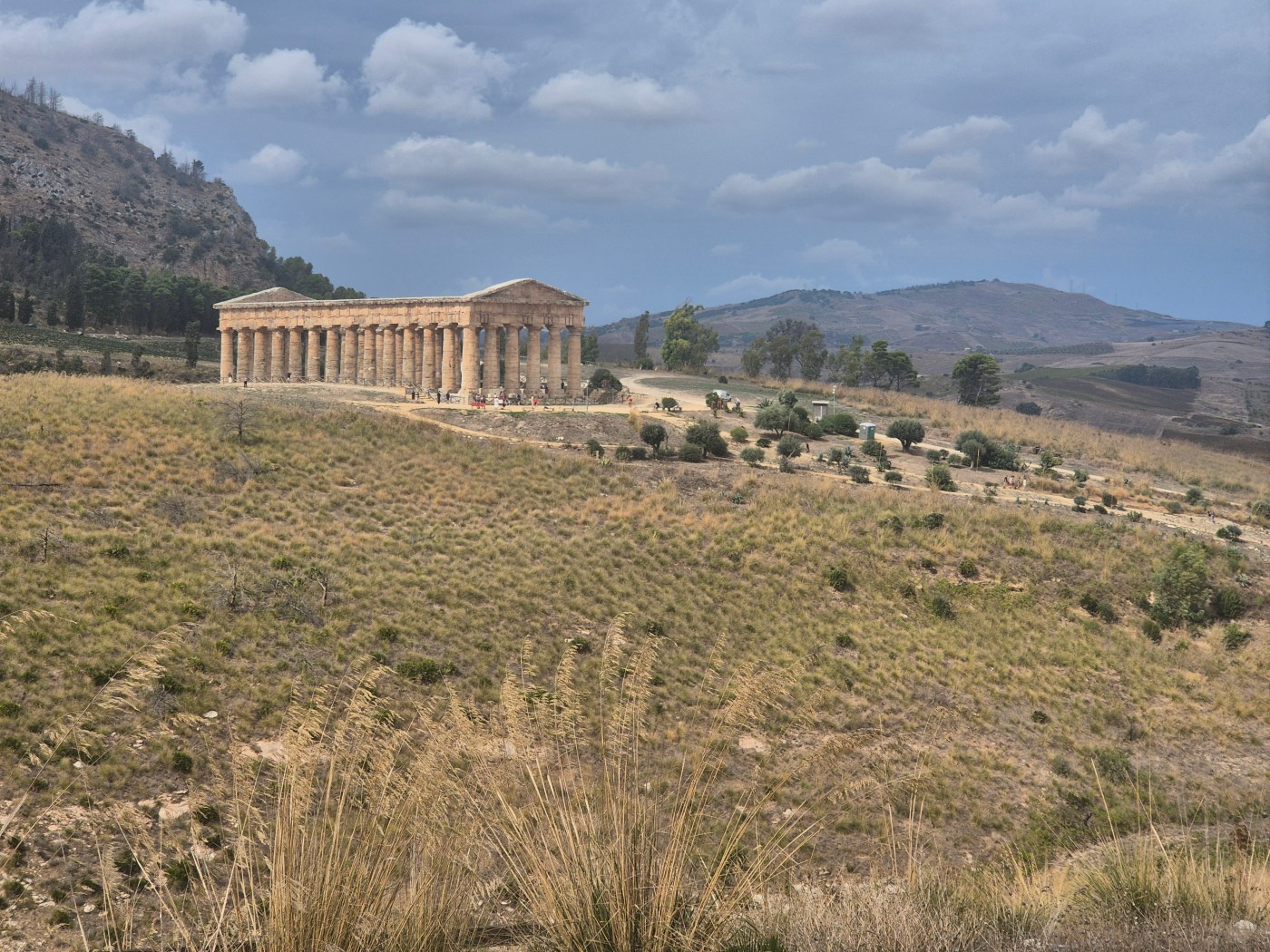
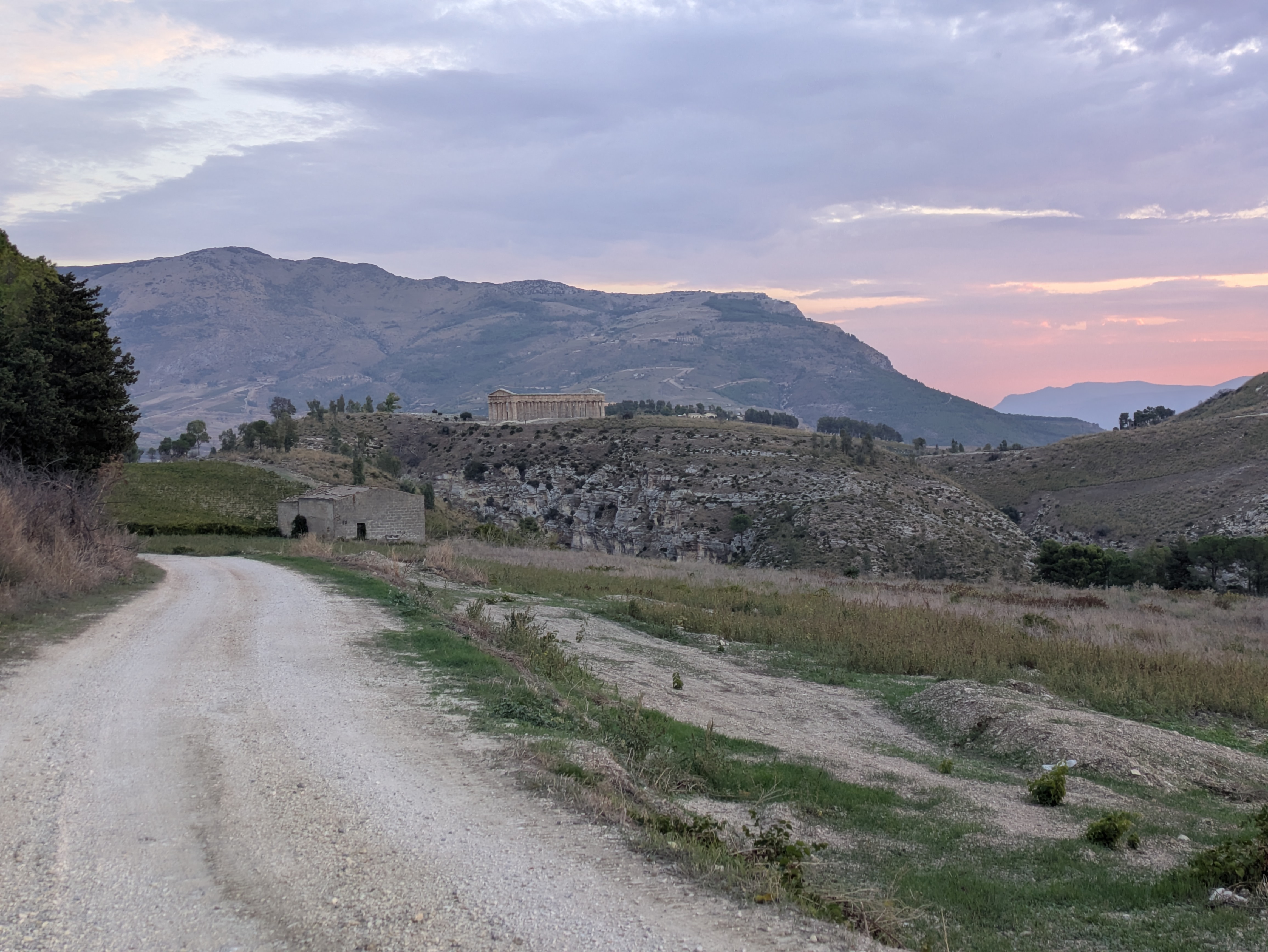
We only had two full days there, and we spent one lazing by the pool in the sunshine. The little town of Segesta is nearby; there are some bars and restaurants in the centre. The big draw is the nearby 5th-century BCE Doric Temple and amphitheatre, and it is well worth a visit. It is as grand as its siblings in Agrigento, two hours away on the south coast; but there are seven of them! This was an enjoyable day. Parking is free. Entrance to the whole site for Brits is €16.50. We spent an enjoyable few hours there. It’s worth the money. The temple is splendid and in a gorgeous setting. The amphitheatre is a sprightly walk up to the top of the hill. There’s a bus for €2.50, but we went on foot. I’m an old fart with a knackered back, and even I rather enjoyed the hike. The theatre has been done up, and it is used for concerts and other performances.
I can certainly recommend Pispisa Agritourismo, with the proviso that you would need a car as it is isolated. Depending on the season, it costs around €100 per night including breakfast. Actually, breakfast was okay, but not great. There was plenty of everything, more than I could finish. The olives and salami were grand. It was weird that the fried eggs were served cold, and perhaps more weird that they were really tasty!
Evening meals were much better. The menu was small, but the dishes were good with the proviso that, as in most of southern Italy, the pasta is very al dente. We had the farm’s own wine with our food. The red was a merlot. I’m not usually a fan of that as it’s often bland; this was brilliant. After the evening meal we’d sit outside, chat, have a few more glasses of wine or a glass of Amaro. We got our restaurant and bar bills on the last day. We had three evening meals, and I reckon a good six litres of wine, plus a few beers, the digestifs, and… okay, it’s all a bit hazy. The total bill was €250. I reckon that’s pretty reasonable.
Taormina
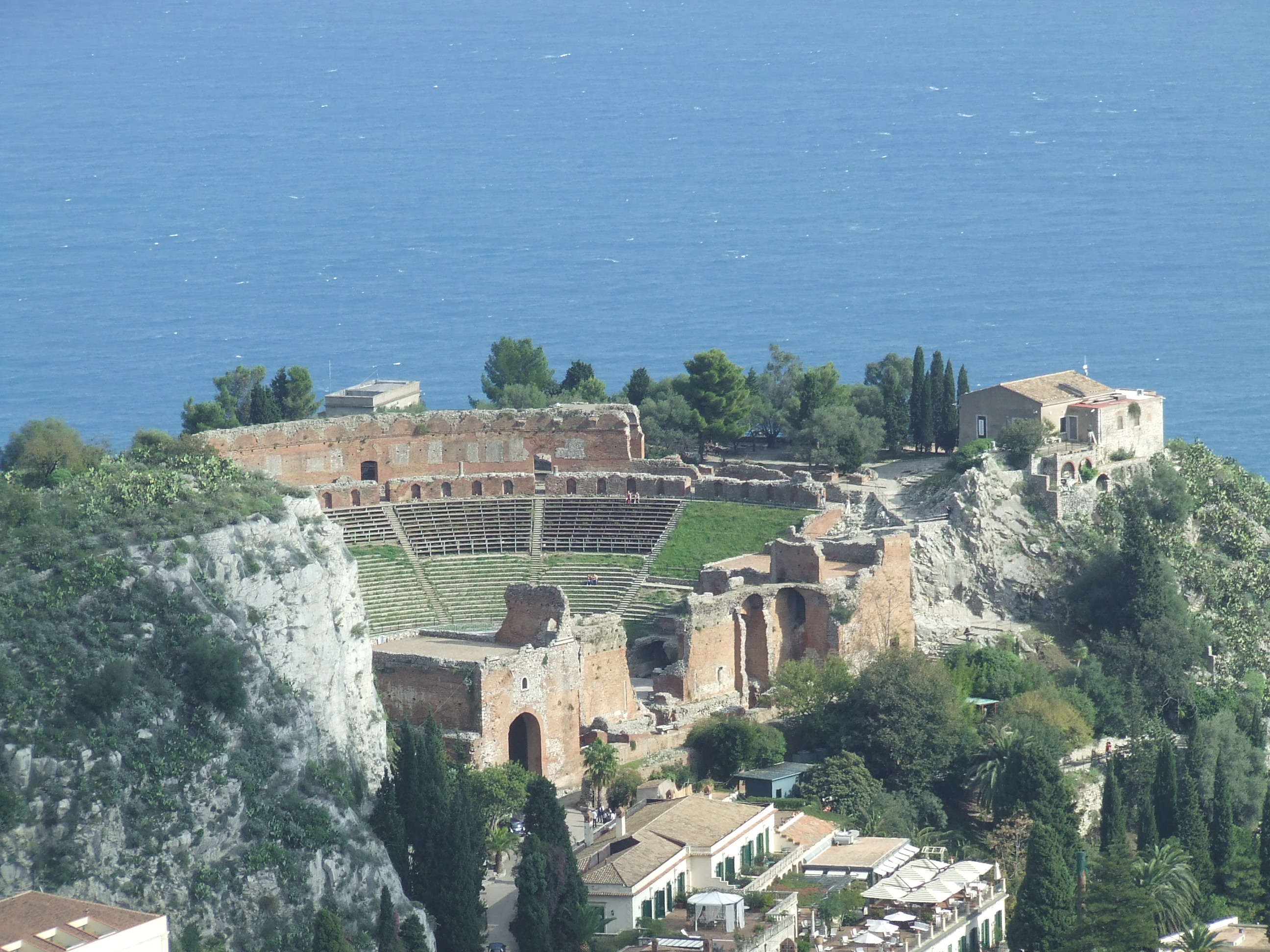
We also went to Sicily in 2009 and stayed at the 4* Hotel Villa Angela. Having flown to Trapani, we hired a car and drove across the island to Taormina. We went late in the season, which kept the prices down, and the crowds were smaller. The hotel is high up the hillside overlooking the town and has stunning views of Mount Etna, the bay, and the fabulous 3rd-century BC Greek theatre. We spent many an hour just gazing at the vista. To get that perspective, the hotel is pretty high up the slopes and above the town. However, that made for a peaceful setting too, and they ran regular minibus shuttles down the hill.
It is an ancient town, founded in 734 BCE, and bears the hallmarks of a place that has seen almost 3000 years of history. It has all the charm of a town free from planning restrictions. The layout of streets, piazzas, and churches is organic and beautifully disordered. Be aware, Taormina is no hidden gem of a place, it is a chic resort with bars and restaurants to match. It is very popular.
We had a car and made use of it on a couple of trips out. Syracusa was good, with a massive, ancient Greek theatre. We were only in the city for an afternoon, and it deserves much longer than that to get a feel for it.
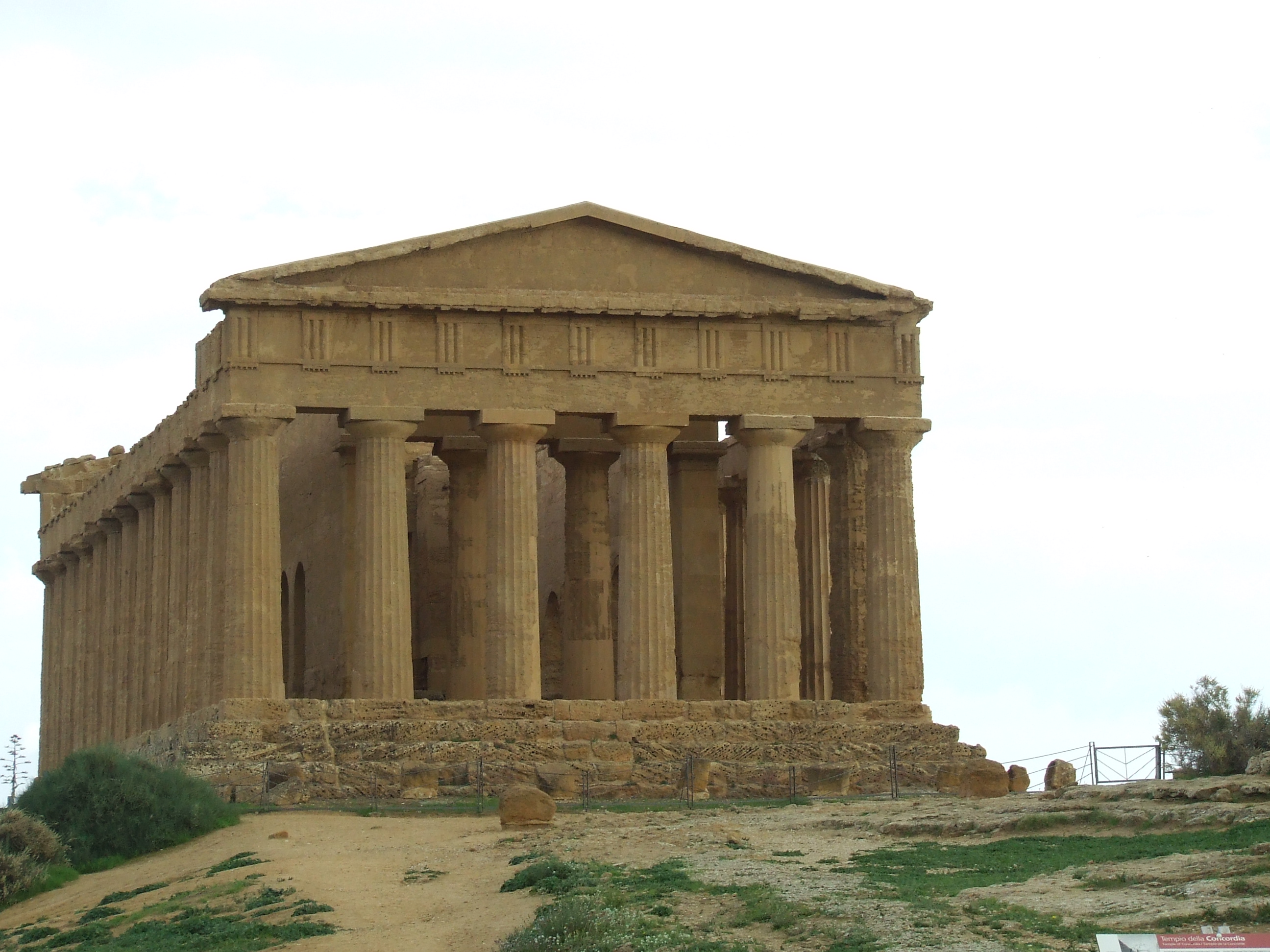
For us, the sightseeing highlight of the trip was Agrigento. The Valley of the Temples is quite fantastic. The site is large, containing seven mostly complete temples and a few more ruined ones. It’s a bucket list-level place to visit and costs only €14 per person. The Temples are mainly on a ridge overlooking the valley beside them.
I could see myself worshipping Zeus back in the day. I can picture the scene: nip to the Temple with a mate or two, pour some libations on the altar, say thanks to the gods for something or other. There would be a nice draft up your toga keeping the essentials cool in the hot sunshine. Afterwards, you could pop into town for a few glasses of wine and a plate of olives in the market square. Most agreeable.
Should You Go?
Sicily has so much to offer, from great beaches, great towns and cities to archaeological treasures. It is the biggest island in the Mediterranean and almost begs the visitor to have at least a two-centre vacation. There are trains linking the main destinations, but I would plan your journey carefully. The routes are fine outside the main cities; within them it is a bit hectic if one is not used to busy roads. In London there is what I call a ‘signal and go’ approach to driving, and it’s similar in Italy. I would say that prices, in general, were pretty reasonable and certainly cheaper than inner-city prices for food and drink in the UK.
It is in a quite southerly location. The benefit of this is that it has a long season, and the weather would likely be good for Easter and October half term. The downside is that it can get very hot; this summer temperatures were as high as 45C. As it is a big island, it’s worth bearing in mind that places might be further apart than you think. If you are near Messina in the northeast of Sicily you could get a ferry over to the mainland. It only takes 20 minutes. You can get a train from Rome to Palermo, and you don’t even have to get off!
I feel the same about Sicily as I do about Crete; I’ve had a taste, and now I want more.


